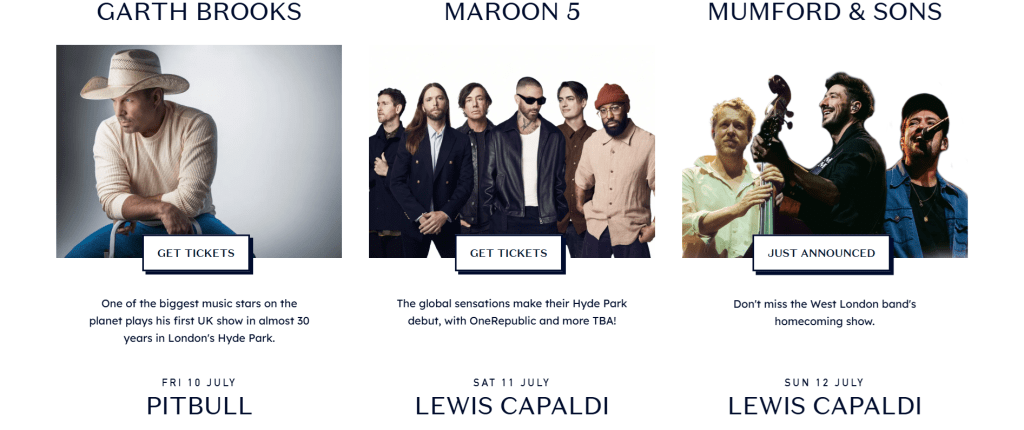
What do you notice about this image?
This is the lineup for BST Hyde Park 2026. Take a moment.
See it?
Zero female headliners. Five male acts.
2026 – 0 female acts, 5 male
2025 – 2 female acts, 4 male
2024 – 4 female acts, 5 male
2023 – 3 female acts, 5 male
2022 – 1 female act, 6 male
24 male headliners. 10 women. That’s 70% male.
This week in your organisation, someone is:
- Asking someone to “just quickly present these findings” to the exec team
- Cc’ing people into an email thread that becomes a project opportunity
- Suggesting whose name goes forward for that conference panel
- Deciding who to grab for a “quick coffee” to talk through a problem
- Remembering to loop someone in because “they’d be good at this”
- Picking who sits where in the meeting room
Six tiny moments. Six different people. Probably all reasonable choices based on who came to mind first, who’s nearby, who they’ve worked with before.
Will they default to the same pattern?
This is structural exclusion. It’s not a policy. It’s not one person’s bias. It’s multiple, sequential, invisible decisions that maintain the system.
No single festival booker created 24:10. No single manager creates your leadership demographics. But the accumulated choices – made in hallways, in inboxes, in that split second before you say someone’s name – add up.
The next time you’re making a decision, ANY decision, ask:
- Who isn’t in this room?
- Whose name didn’t I think of?
- Who got the last three opportunities like this?
- What pattern am I reinforcing right now?
By Friday, structural exclusion will have had another good week. Unless you interrupt the pattern.
#StructuralExclusion #RepresentationMatters #InclusiveLeadership
 Lost and Desperate
[…] have added “structural exclusion” to the list. In early December, I posted a comment about how the BST concert organisers […]
LikeLike
[…] on neurodivergent talent. Three speakers, all men. This isn’t an oversight. This is what structural exclusion looks like in practice. It’s not malicious, just unconsidered. And that’s EXACTLY the […]
LikeLike